🍚 The Benefits of Occupational Therapy in Improving Writing Skills
Writing is not just about holding a pencil and forming letters; it is a complex skill that combines muscle strength, motor coordination, and attention. This is where occupational therapy comes in as an effective tool to support children who struggle with writing.

✨ How Does Occupational Therapy Help Your Child?
Developing Fine Motor Skills:
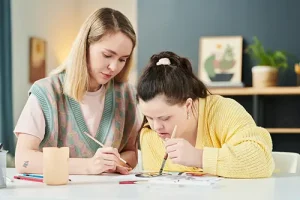
Therapists use activities such as playing with clay, cutting paper, and coloring to strengthen finger and hand muscles, making pencil control easier.
Improving Hand–Eye Coordination: Therapists work with children on exercises that strengthen the link between vision and movement—like tracing lines or copying shapes—which enhances writing accuracy.
Correcting Posture and Pencil Grip: Many children struggle because they don’t know how to hold a pencil correctly or they write in an uncomfortable posture. Occupational therapy teaches proper positions that make writing smoother and more comfortable.
Enhancing Attention and Focus: Through interactive activities, children learn to maintain focus for longer periods, helping them complete writing tasks without frustration.
💡 When Should You Seek Help?
If you notice that your child’s handwriting is unclear, they get tired quickly while writing, or they struggle to hold the pencil firmly, it may be time to request an evaluation from an occupational therapist.
💙 In Summary:
Occupational therapy not only helps your child improve their writing skills—it also boosts their confidence by enabling them to complete schoolwork like their peers. At Mawaheba Center, we believe that every small step in the learning journey opens big doors for the future.